Which Tool Shows the Websites AI Assistants Cite in Your Industry?
Citable · 19 November 2026 · 12 min read
Several tools show the exact URLs AI assistants cite for a prompt, including Profound, OtterlyAI, Peec AI and Semrush. The right one depends on which assistants you need covered, whether you need the full list of cited URLs or only a diagnosis, and what it costs. Citable measures whether ChatGPT, Gemini, Perplexity, Claude, Grok and Google AI cite or recommend a site and also writes and publishes the fixes, so it suits buyers who want to act on the list.
Key points:
- A citation is a link used as a source. A mention is a brand name in the answer text. Check which one a tool counts.
- Engine coverage differs by tool, so check Claude and Grok first.
- Entry prices span a wide range, and some reviews disagree on them. Confirm the current price on the vendor's page.
- Free options give you a traffic baseline. They don't give you the list of cited sites.
What does an AI citation tool show?
It records the websites and exact URLs that AI answers cite for a prompt, according to Ansvisor. For your industry, you give it the questions buyers ask. It returns the pages assistants lean on, yours and your competitors'. A tool that only reports a share-of-voice score doesn't give you that list.
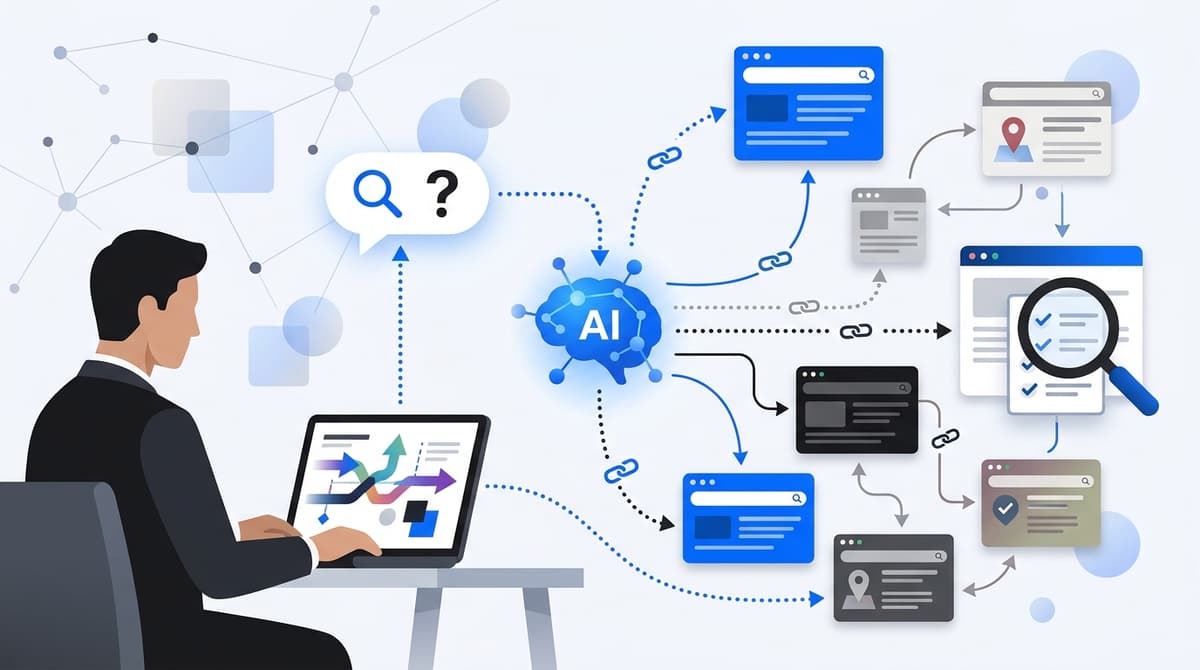
The list differs by assistant. A 2026 analysis from Analytics Insight reports ChatGPT citing about 15 sources per response and Gemini about three. Similarweb says a source that dominates in ChatGPT may have far less influence in Perplexity. Read every result engine by engine.
Answers also change between runs of the same question.
Is a citation the same as a mention?
No. A citation is a link to your site shown as a source. A mention names your brand in the answer text, with or without a link.
OtterlyAI draws this line: a mention happens when an answer names your brand, product or company without necessarily linking to your website. The difference matters when you read a dashboard. A tool can count one and miss the other, and a page can name you without linking to you.
Which criteria separate the tools?
Each option below gets the same four criteria.
- Engines covered: Does the tool track the assistants your customers use, including Claude and Grok?
- Per-prompt list of cited URLs: Does it show every cited page for each prompt? Can you group results by domain and see competitor domains?
- What happens after the list: Does it stop at diagnosis, or does it help you change pages and check whether the citation moved?
- Starting price: Can you confirm the price on the vendor's own page?
Where the sources consulted don't cover a criterion for an option, the entry says so.
How does each tool score on those criteria?
Profound
"Profound shows every cited URL for each prompt it monitors, including citations that go to competitor domains." — Profound, citation tracking page
Profound's page says its tracking covers ChatGPT, Perplexity, Google AI Overviews and other answer engines. It classifies each cited source as Owned, Competitor, Earned Media, PR Wire, Social or Institution. You can mark competitors to compare citation share.
The sources consulted don't detail Grok coverage or any content-writing feature.
OtterlyAI
OtterlyAI stores every cited URL per prompt, groups them by domain and tracks how positions move week to week. It also flags which cited pages mention your brand. Its tracker page argues that a cited source that doesn't mention you is a gap to close with outreach rather than new content.
The sources consulted don't detail writing or CMS publishing.
Semrush
Semrush's AI Visibility Toolkit lists the exact sources per prompt in the "Cited Sources" tab of Visibility Overview, as Semrush's own blog describes. A Geoptie roundup of citation tools adds that Semrush sorts sources into owned, competitor, third-party, social, affiliate and other types, and charts citation rate against competitors over time.
The sources consulted don't detail its engine list, a content workflow or a price for the AI reports.
Peec AI
Peec AI's Sources view shows the exact domains and individual URLs that AI answers cite, and it categorizes them, according to Geoptie's Peec review. A Discovered Labs review calls it a diagnostic tool: it identifies where you're missing citations but cannot produce or restructure content to win them.
The sources consulted don't detail its engine list.
Similarweb
Similarweb's AI Citation Analysis maps the domains and URLs most cited by AI engines across the topics you track, and shows which prompts each source affects. It tracks ChatGPT, Google AI Mode, Gemini and Perplexity, and it doesn't list Claude or Grok.
Ahrefs Brand Radar
Ahrefs Brand Radar reports citations as how often AI links to your pages or domains as a source, alongside mentions and share of voice. Its index is built on Ahrefs' keyword database, so coverage may be limited for brands with little or no search volume. The sources consulted don't detail a per-prompt list of third-party URLs or a content workflow.
Citable
Citable measures whether ChatGPT, Gemini, Perplexity, Claude, Grok and Google AI cite or recommend a site. It works out why competitors are picked instead, then writes sourced articles and makes page fixes, published to the site's CMS. A full per-prompt list of cited URLs grouped by domain is not part of Citable's description. If that list is your main need, confirm it first.
Side by side
| Tool | Engines named | Per-prompt cited URLs | After the list | Entry price |
|---|---|---|---|---|
| Profound | ChatGPT, Perplexity, Google AI Overviews, others | Yes, including competitor domains | Sources classified by type; content features not detailed | Around $99/month, ChatGPT only (third-party review) |
| OtterlyAI | ChatGPT, Claude, Perplexity, Copilot, Gemini, Google AI Mode, AI Overviews | Yes, grouped by domain | Flags cited pages that mention you; suggests outreach | $29/month (reported) |
| Semrush | Not detailed | Yes, in the Cited Sources tab | Tracks citation rate against competitors | Not detailed |
| Peec AI | Not detailed | Yes, domains and URLs | Diagnosis only | About $95/month (€89); reports vary |
| Similarweb | ChatGPT, Google AI Mode, Gemini, Perplexity | Domains and URLs across tracked topics | Shows prompts each source affects | $99/month and $333/month plans |
| Ahrefs Brand Radar | AI Overviews, AI Mode, ChatGPT, Perplexity, Gemini, Copilot; Claude in Custom Prompts only | Citations to your pages and domains; third-party list not detailed | Not detailed | From $50/month (Custom Prompts) |
| Citable | ChatGPT, Gemini, Perplexity, Claude, Grok, Google AI | Not detailed | Writes sourced articles and page fixes, published to CMS | From $24/month per site |
Which tools cover Claude and Grok?
Few cover both. OtterlyAI's tracker page lists seven engines: ChatGPT, Claude, Perplexity, Copilot, Gemini, Google AI Mode and AI Overviews. Grok is not among them.
Similarweb lists neither Claude nor Grok. Ahrefs says its index covers AI Overviews, AI Mode, ChatGPT, Perplexity, Gemini and Copilot, and that Claude is available only in Custom Prompts. Profound names ChatGPT, Perplexity and Google AI Overviews plus other engines, without naming Grok.
Citable covers all six engines it names. Claude and Grok are paid add-ons, so full coverage depends on your plan (see the price list below).
Grok coverage is less common among the big-brand tools. Citation Radar, listed by Linkeddit, tracks ChatGPT, Perplexity, Gemini, Claude and Grok, with pricing from a free tier to $199 per month. It sits outside the comparison above, but it shows the coverage exists.
What does each tool cost?
Prices change, and reviews disagree. Treat each figure as a starting point.
- OtterlyAI: starts at $29/month, according to OtterlyAI's 2026 guide.
- Profound: a Discovered Labs pricing review places the entry price around $99/month for ChatGPT only.
- Peec AI: 2026 sources disagree. Geoptie lists Starter at $95/month (€89), and other reports give about $89 or €89.
- Semrush: a price for its AI visibility reports is not detailed in the sources consulted.
- Similarweb: its pricing page lists AEO Intelligence at $99 and the AEO and SEO bundle at $333 per month.
- Ahrefs Brand Radar: Custom Prompts from $50/month, and the AI Visibility Index from $199/month.
- Citable: Starter costs $24/month per site, with articles included. Growth costs $48/month per site and Business $90/month per site. The Claude add-on is +$9/month on Starter and +$15/month on Growth. The Grok add-on is +$9/month on Starter, +$19/month on Growth and +$35/month on Business.
Can you see cited sources for free?
Not as a full list. GA4 custom channel groups can track AI referral traffic, but they don't show which pages AI cites. Google Search Console gives no separate filter for AI Overview citations, according to OtterlyAI's guide. Citable's walkthrough on tracking ChatGPT traffic in GA4 covers the setup.
For Google specifically, Geoptie's roundup lists a free AI Overviews tracker. It checks whether Google's AI Overview cites your site for any search, in 123 countries. It covers AI Overviews only. If you also care about AI Mode, Citable's explainer on AI Mode describes how it differs from AI Overviews.
Use these to build a baseline. Once you need the per-prompt list across assistants, you need a paid tool.
Which tool fits which buyer?
- Citable: choose it if you want to go from a citation gap to a sourced article or page fix, published to your CMS, with a weekly check on the result. Skip it if your only need is a per-prompt list of cited URLs, unless you confirm that feature first.
- OtterlyAI: choose it for a low published entry price, URL-level tracking grouped by domain, and brand-mention checks on cited pages. Skip it if Grok is on your list.
- Profound: choose it if you need competitor citation share and classified sources across several engines. Confirm the current price on its own page.
- Semrush: choose it if you already work in its reports and want cited sources next to your other data. Confirm its engine coverage and price before you commit.
- Peec AI: choose it for a diagnostic view of cited domains and URLs, if you plan to write or fix the pages yourself.
- Similarweb: choose it if you want a map of the most-cited domains and the prompts they influence, and ChatGPT, AI Mode, Gemini and Perplexity are enough.
- Ahrefs Brand Radar: choose it if you already use Ahrefs and your brand has search volume. Its index may cover small brands thinly.
What do you do with the list of cited sites?
Sort the cited domains into your own pages, competitors, third-party sites and social. Profound and Semrush classify sources this way.
Each type points to a different action. Gaps on your own pages call for a page fix or a new article. A third-party page that never mentions you, in OtterlyAI's framing, is a target for outreach. Then check whether the citation moved.
Next steps
- Write your prompt set: list the questions buyers ask in your industry, in their words.
- Run them yourself: ask each assistant your customers use, and note which sites it cites.
- Set up GA4: create an AI referral channel group so you can see whether cited visits arrive.
- Ask every vendor three questions: which engines it tracks, whether it lists every cited URL per prompt, and the current price on its own page.
- Pair the list with action: if you want to act on the cited-source gaps, Citable measures them weekly, writes the article or page fix and publishes it to your CMS.
Frequently asked questions
Is there a free way to see which websites ChatGPT cites for my industry?
Not as a complete list. GA4 shows AI referral traffic but not the pages AI cites, and Search Console has no separate filter for AI Overview citations. You can ask ChatGPT your buyers' questions yourself and note the links it shows.
Which AI citation tool covers Grok and Claude as well as ChatGPT and Perplexity?
Citable covers ChatGPT, Gemini, Perplexity, Claude, Grok and Google AI, with Claude and Grok as paid add-ons. Citation Radar lists ChatGPT, Perplexity, Gemini, Claude and Grok, but not Google AI. OtterlyAI covers Claude but not Grok, and Ahrefs offers Claude only in Custom Prompts.
How much does an AI citation tracker cost for a small business or a single site?
Entry prices in the sources run from $24/month per site for Citable and $29/month for OtterlyAI to about $95/month for Peec AI and $99/month for Similarweb. Ahrefs Custom Prompts start at $50/month. Plans differ in prompts and engines, so compare them against the assistants you need.
Do AI citation tools show which pages to change, or only which sources are cited?
It varies. Peec AI is described as diagnostic: it shows where you're missing citations and can't produce content to win them. OtterlyAI flags cited pages that don't mention you and points to outreach. Citable writes sourced articles and makes page fixes, published to your CMS.
Sources
- AI Citation Analysis Tool for AEO | Profound
- AI Citation Tracker | OtterlyAI
- AI Citation Checker: Track & Analyze AI Answer Sources | Similarweb
- Ahrefs Brand Radar
- How to Track AI Search Engine Citations & Sources: The Complete Guide for 2026 | OtterlyAI
- AI Citation Tracking Tools for Websites: Tested and Compared | Ansvisor
- 9 Best AI Citation Tracking Tools in 2026 | Geoptie
- AI Citation Tracking in 2026: How It Works, What It Costs, and the Tools Compared | Linkeddit
- Why AI is citing third-party sources instead of your site? | Semrush
- Semrush AI Toolkit: Measure Brand Visibility in AI Search | Analytics Insight
- Peec AI Review 2026: Best for AI Visibility Monitoring? | Discovered Labs
- Peec AI review: citation tracking for competitive intelligence and content optimisation | Discovered Labs
- Peec AI Review 2026: Pricing & Engine Limits | Geoptie
Keep reading
25 November 2026 · 9 min read
Why AI Doesn't Recommend Your Framer Studio, and What to Check
If AI skips your Framer studio, test whether crawlers can read your pages, then measure buyer questions and strengthen thin project evidence and unclear pages.
24 November 2026 · 11 min read
Hand-written or AI-drafted: six checks for AI citations
Hand-writing or a weekly AI service? Neither wins by default: six checks on review, sourcing, disclosure and measurement decide which fits you.
23 November 2026 · 7 min read
What Google AI Overviews are and how to measure them
Google AI Overviews are AI-generated summaries on some searches. You can't turn them off, but you can measure impressions, clicks and citations.